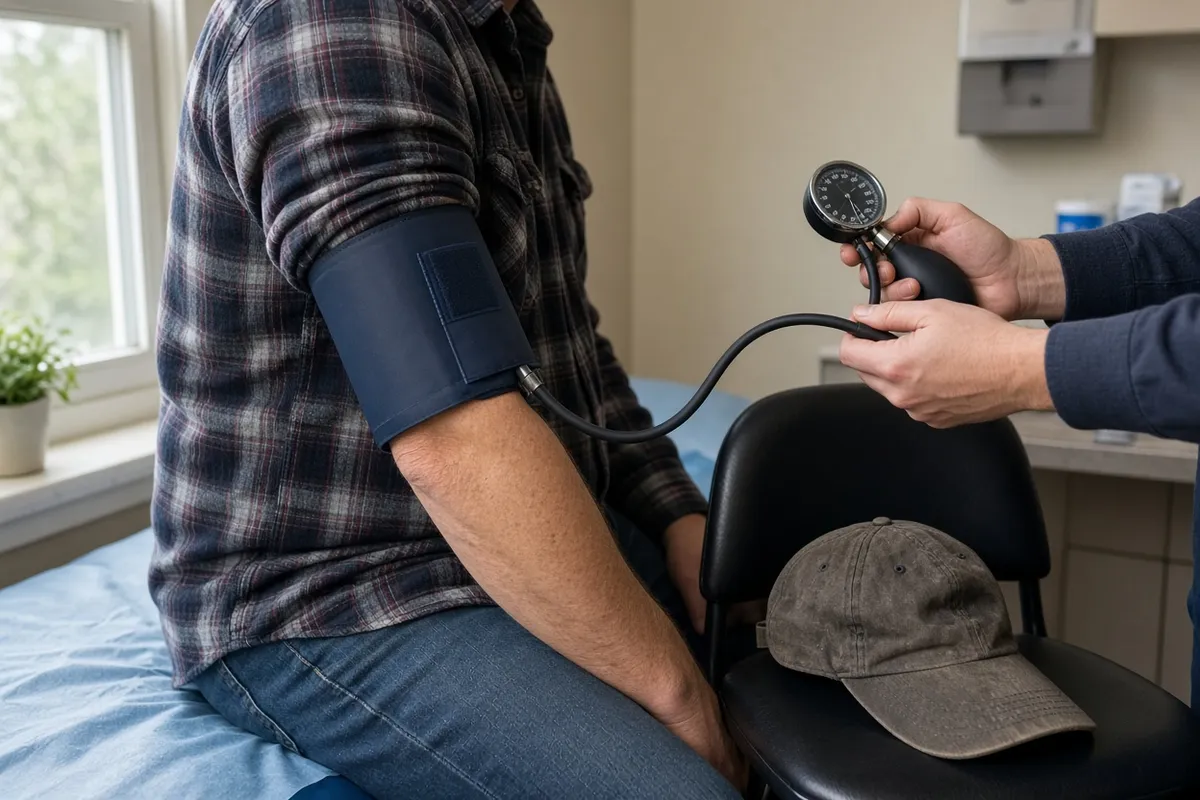
High blood pressure is one of the most common reasons a driver walks out of a DOT physical with a short medical card. The rule itself is one line. The details that decide how long your card lasts are in FMCSA’s guidance for medical examiners. Here is what both say.
What the rule says
Under 49 CFR 391.41(b)(6), a driver must have no current clinical diagnosis of high blood pressure that is likely to interfere with safe driving. The regulation does not list numbers.
The numbers come from FMCSA’s Medical Advisory Criteria, published as Appendix A to Part 391. FMCSA says this guidance is strictly advisory and does not have the force of law. The certified medical examiner makes the final call. In practice, most examiners follow it.
Blood pressure limits for a DOT physical
| Blood pressure | Stage | What FMCSA guidance says |
|---|---|---|
| Below 140/90 | Normal for DOT | Blood pressure does not shorten the card. The longest card is 2 years. |
| 140–159 / 90–99 | Stage 1 | May be certified for 1 year. Yearly exams after that, at 140/90 or lower. |
| 160–179 / 100–109 | Stage 2 | One-time 3-month card to start or adjust treatment. At 140/90 or lower on treatment, 1 year. |
| 180/110 or higher | Stage 3 | Not certified, even for a short time, until it is 140/90 or lower and treatment is well tolerated. Then 6-month cards. |
The stage depends on the higher of the two numbers. A reading of 150/85 is Stage 1 because of the top number. A reading of 135/102 is Stage 2 because of the bottom one.
The 2-year limit comes from 49 CFR 391.45: a driver must be re-examined at least every 24 months.
How long is my card at 145/95?
145/95 is Stage 1. Under the guidance, the examiner may certify you for 1 year. At your next exam, the examiner expects 140/90 or lower.
If you come back still above 140/90 but under 160/100, the guidance allows a one-time 3-month card to get your pressure down to 140/90 or less. It is one time, so you cannot keep getting 3-month cards at Stage 1.
What happens at 160/100 or higher?
At 160–179 over 100–109 (Stage 2), FMCSA treats this as a clear sign you need blood pressure medicine. You can get one 3-month card to start or adjust treatment. If you then show 140/90 or lower and the medicine agrees with you, you can be certified for 1 year.
At 180/110 or higher (Stage 3), the guidance says you should not be certified at all until your pressure is at 140/90 or lower and treatment is going well. After that, cards are 6 months long, with a recheck every 6 months.
FMCSA’s FAQ on hypertension stages gives the same periods. It also says a driver who is being treated for high blood pressure should be certified at least once a year.
Will the examiner check more than once?
Yes. The advisory criteria say a high reading should be confirmed by at least two more measurements. One bad reading after a long drive or a cup of coffee should not decide your card on its own.
Can I fail, then go to another clinic the same day?
Not anymore, in practice. Since June 23, 2025, if an examiner finds you are not physically qualified, they must tell you the result will be reported to FMCSA. All medical cards issued to you before are then no longer valid (49 CFR 391.43(g)(3)).
The examiner can also put your exam on hold instead of failing you. In that case you have 45 days to bring the extra information or finish the exam, and the pending status is reported to FMCSA as well.
So the real fix is to bring the number down, not to find a friendlier clinic.
Can I take blood pressure pills and still drive?
Yes. FMCSA’s guidance treats medicine as a normal part of treatment and even calls it a must at Stage 2. Treatment also includes changes to the things that raised your pressure in the first place.
The guidance does note that many blood pressure medicines have side effects, such as drowsiness or fainting. The examiner weighs those for each driver. Tell your examiner what you take and how it affects you.
Tips before your DOT physical
These are practical steps, not FMCSA rules:
- If you take blood pressure medicine, keep taking it as prescribed. Bring a list of your medicines and doses.
- Book the exam at a time when you are rested, not right after a long shift.
- Skip energy drinks and extra coffee before the exam.
- Sit quietly for a few minutes before the reading.
- If your reading is high, ask for it to be rechecked during the exam.
- Check your own pressure at home in the weeks before, so the result is not a surprise.
The physical is not the only test you face as a CDL driver. Here is what a DOT drug test checks for.
If your card has already run out, see what to do if your CDL medical card expired on CDL News.
More rule changes for drivers are in our Driver Rules section.